The scariest thing about Halloween might be the price of a costume. But this year, more people are reaching for scissors, glue guns and whatever they can find in their closets to create their own looks.
Online searches for “DIY costumes” have reportedly jumped 653% over the last year, according to the trend-spotting platform Exploding Topics. The appeal goes beyond finding a cheaper alternative to a store-bought costume. It’s an opportunity to get creative, personalize a look and turn the process of getting dressed up into part of the Halloween fun.
“It’s more fun just to, like, really create and personalize something for yourself,” said Stacey Shively, chief merchandising officer for arts and crafts retail chain Michaels.
Shively also connects the trend to a broader resurgence in “grandma hobbies,” from needlepoint and knitting to painting and sewing. A March report from The Associated Press found a growing number of Gen-Z and millennials are turning to more analog crafts and hobbies to help spend less time on their phones. Card data from Bank of America also found these younger generations are spending more money on hobbies.
People who have embraced making things throughout the year are finding new ways to put those skills to use when Halloween rolls around.
And unlike some seasonal fads, DIY costumes have a history that suggests they’re not going anywhere.
For Shively, making Halloween costumes is a family tradition that has carried across generations.
“When we were kids, me in particular, my mom made my costumes, and then I taught my daughter how to make her costumes,” she said.
Now, Shively’s daughter hosts elaborate Hollywood-style parties where guests dress as characters from movies. It’s a reminder that a homemade costume can become more than something to wear for trick-or-treating. It can be a creative project, a family activity and a reason to get friends together.
“I don’t think that’s gonna go away,” Shively said. “It transports you from your everyday life to this new life for one day. And that’s a really great feeling, right?”
That transformation is part of Halloween’s enduring appeal. Whether someone spends weeks sewing a detailed character costume or throws together a look the afternoon of a party, dressing up offers a chance to step outside the everyday and become someone else for a night.
Social media and pop culture give people plenty of inspiration, too. Shively expects costumes to reflect the movies, characters and cultural moments capturing people’s attention, with homemade interpretations allowing everyone to put their own spin on a popular look.
The best part? You don’t necessarily need a sewing machine, an elaborate plan or a closet full of crafting supplies.
For anyone who sees a complicated costume online and immediately decides they could never pull it off, Shively has a simple starting point: Look in your closet first.
“What do I have in my closet that can fit that need first?” she said. “Do I have a T-shirt? Do I have jeans? Do I have the jacket? What do I have?”
A blue T-shirt can become the foundation for a superhero costume with a handmade emblem. A jean jacket can be transformed with fabric paint. And an ordinary black outfit can go a long way toward creating a witch costume.
Shively recommends starting with an idea, finding a photo for inspiration and breaking the look into individual pieces. Instead of trying to recreate every detail, focus on the elements that make the character recognizable.
Her other essential tools? Scissors and a glue gun.
“A glue gun is a powerful tool,” she said, noting that it can help beginners attach embellishments without learning to sew. Thrifted clothes and pieces already in your wardrobe can also serve as a starting point, with fabric, trim and other details adding a personal touch.
The key is to keep expectations realistic. Shively said one of the biggest mistakes beginners make is “going too complex.”
“Start small, get a little win under your belt, and then the next year you can make it even better and better and better,” she said.
Another reason DIY costumes appeal to families is the potential savings. Buying several costumes can add up quickly, particularly for parents dressing multiple children. But creating a memorable look doesn’t have to mean starting from scratch or spending a fortune.
Start by shopping your own closet for basics like black clothing, jeans, T-shirts or jackets that can become the foundation of a costume. From there, a few inexpensive additions, such as fabric, trim, face paint or handmade accessories, can help bring a look together; an all-black outfit with a witch hat is an easy way for a quick look, Shively notes as an example.
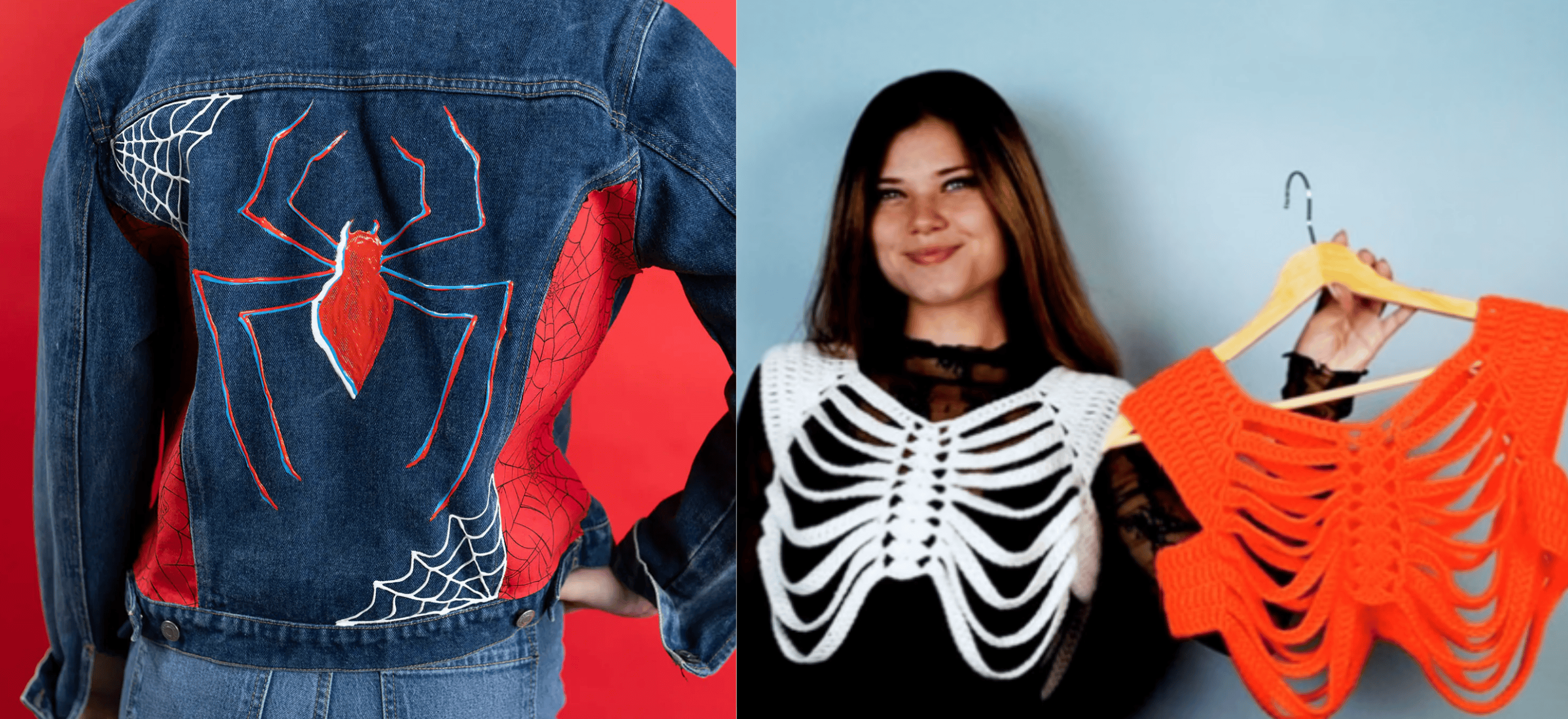
For shoppers looking for a little guidance, Shively pointed to Michaels’ free online classes offering expert-led step-by-step tutorials on making one-of-a-kind pieces like a crocheted skeleton top or a Spider-Man-inspired jacket.
Thrift stores such as Goodwill are another option for finding budget-friendly clothing, accessories and unusual pieces that can be transformed with a little imagination. Secondhand shops, consignment stores and resale apps can also be good places to look for costume pieces without paying full retail prices.
And DIY doesn’t have to mean disposable. Some makers invest in quality fabric, sewing and intricate details to create costumes they can wear to multiple events throughout the year. Others prefer a quick, inexpensive look for one night. Both approaches have a place in the trend.
The DIY spirit extends beyond costumes. For many people, decorating is just as much a part of Halloween as dressing up, whether that means creating a spooky front porch, personalizing pumpkins or crafting decorations for the home.
Using faux pumpkins in lieu of real ones can be more cost-effective in the long run. Unlike real ones, they can be reused year after year without worrying about them rotting or attracting animals when displayed outside. They also offer plenty of room for creativity, from unexpected colors and patterns to designs that fit a particular aesthetic.
The same approach works for other decorations, too. Repurposing items around the house, shopping secondhand for unusual pieces or adding paint and embellishments to inexpensive finds can help create a distinctive Halloween display without requiring a big budget.
Whether you’re transforming a craft pumpkin, making your own decorations or finding a second life for something from a thrift store, the idea is the same: Halloween doesn’t have to come straight off a store shelf. Sometimes, the fun is in making it your own.